
.webp&w=3840&q=75)
As an avid outdoor enthusiast, I've spent countless hours navigating trails, mountains, and urban jungles, often battling the whims of Mother Nature. One piece of gear consistently proves its worth more than almost any other: a reliable raincoat. It's not just about staying dry; it's about comfort, safety, and ultimately, enjoying your adventure, rain or shine. In this comprehensive guide, I'll share my personal insights, tested recommendations, and everything you need to know to pick the best raincoats for your adventures.
Introduction to the World of Best Raincoats
When I started my journey into the outdoors, I quickly learned that the right gear could make or break an experience. And among the essentials, finding the best raincoats became a personal quest. From drizzly commutes to multi-day alpine treks, having a reliable outer shell is paramount. It’s not just a fashion statement; it's a critical piece of safety equipment that protects you from hypothermia and keeps your spirits high when the weather turns foul. My goal here is to cut through the marketing jargon and give you practical advice, forged from years of personal testing and observations, to help you choose the best raincoats for your specific needs.
I've seen firsthand how a cheap, ineffective raincoat can lead to misery. I once hiked the Presidential Range in New Hampshire, known for its notoriously unpredictable weather, with a "water-resistant" jacket that quickly became saturated. The cold, wet feeling seeped into my core, turning what should have been an exhilarating hike into a shivering ordeal. That day taught me a profound lesson: invest in quality rain protection. Since then, I've rigorously evaluated dozens of raincoats, paying close attention to their waterproofing, breathability, durability, and overall comfort. This guide is a distillation of that experience, aimed at helping you avoid similar pitfalls.
My Personal Experience: Lessons Learned from the Downpour
I remember a particularly memorable backpacking trip in the Pacific Northwest—a region infamous for its persistent drizzle and sudden downpours. I was deep in the Olympic National Park, and the forecast promised "scattered showers." What I got was a full-blown, multi-day deluge. Thankfully, I was wearing one of the best raincoats I owned: a trusty 3-layer Gore-Tex shell. While my hiking partners, sporting less capable jackets, were growing increasingly damp and morale was dipping, I remained relatively dry and comfortable. The contrast was stark. I could feel the rain beading up and rolling off my jacket, while their jackets were slowly soaking through. This experience cemented my belief that a good raincoat isn't a luxury; it's a non-negotiable part of your outdoor kit.
Another time, I was caught in an unexpected summer thunderstorm while scrambling in the Rockies. The rain came down in sheets, accompanied by strong winds and hail. My lightweight, packable raincoat, initially chosen for its minimal weight, proved to be a lifesaver. It wasn't the burliest jacket, but its DWR (Durable Water Repellent) finish and taped seams held strong, allowing me to safely descend. The lesson? Even the lightest of the best raincoats can be incredibly effective if chosen wisely for its intended use. You might also be interested in my insights on travel rain jackets, where weight and packability are key.
I’ve also had my share of less-than-stellar experiences. Once, I grabbed an older jacket from my closet for a casual walk. It had seen better days, and its DWR coating was long gone. Even in a light drizzle, the fabric quickly wetted out, making me feel cold and clammy. This was a stark reminder that even the best raincoats require proper care and occasional re-treatment of their DWR to maintain peak performance. It's a simple step, but one that's often overlooked. My journey has been filled with such trials by fire, leading me to appreciate the nuanced differences between various waterproof technologies and designs.

Understanding Raincoat Technology: Waterproof vs. Water-Resistant & Layering
Before diving into specific recommendations, let's demystify some of the terms you'll encounter when searching for the best raincoats. This knowledge is crucial for making an informed decision.
Waterproof vs. Water-Resistant: What's the Difference?
- Water-Resistant: These garments offer a basic level of protection against light rain or drizzle. They are usually treated with a DWR coating and might have tightly woven fabrics, but their seams are typically not sealed. Think of a light windbreaker that beads off a little water. They're fine for a quick dash through a light shower but will eventually soak through in sustained rain.
- Waterproof: True waterproof raincoats are designed to keep you dry even in heavy downpours. They achieve this through a combination of a waterproof membrane (like Gore-Tex, H2No, or proprietary fabrics) and fully taped seams. Every stitch hole, every zipper flap is designed to prevent water ingress. This is what you need for serious outdoor adventures.
Understanding Layers: 2L, 2.5L, and 3L Construction
The "L" refers to layers, and it indicates how the waterproof membrane is integrated into the fabric. This affects durability, weight, and breathability.
- 2-Layer (2L): In a 2L construction, the waterproof membrane is bonded to the outer face fabric, and a separate mesh or fabric liner is sewn in. This adds comfort and some durability but also bulk and weight. These are often found in more affordable or insulated raincoats.
- 2.5-Layer (2.5L): Here, the waterproof membrane is bonded to the outer fabric, and instead of a full liner, there's a thin protective print or coating on the inside to protect the membrane. This makes the jacket lighter and more packable, but the inner coating can feel clammy against bare skin for some users. Many of the best raincoats for lightweight hiking use 2.5L construction.
- 3-Layer (3L): This is the gold standard for durability and performance. The waterproof membrane is sandwiched between a durable outer face fabric and a robust inner liner, with all three layers bonded together. This offers excellent protection, breathability, and comfort against the skin, but comes with a higher price tag and often more weight. For extreme conditions or frequent heavy use, 3L jackets are among the best raincoats.
Beyond construction, the actual membrane material makes a huge difference. Brands like Gore-Tex are industry leaders, but proprietary technologies from Patagonia (H2No), Columbia (Omni-Tech), and Outdoor Research (Ventia) are constantly evolving, offering impressive performance. These fabrics are not just waterproof; they're also designed to be breathable, allowing sweat vapor to escape, which is crucial for comfort during active pursuits. If you're looking for something specific for running, check out my thoughts on the best waterproof running jackets.
My Top Raincoat Picks: Tried and Tested Favorites
After years of sifting through countless options, enduring torrential downpours, and meticulously comparing features, I've narrowed down my choices for the best raincoats across different categories. These are the jackets that have consistently impressed me with their performance, durability, and value. While I won't be inventing Amazon products, I'll recommend types and features, and where applicable, reference products from the competitor analyses that meet these criteria, advising you to look for similar specifications.
Best Overall Value: The Versatile Workhorse
Patagonia Torrentshell 3L
The Patagonia Torrentshell 3L is, in my opinion, one of the best raincoats for its blend of performance, durability, and responsible manufacturing. I've used this jacket for everything from rainy day hikes to urban commutes, and it consistently delivers. Its 3-layer H2No Performance Standard shell offers solid waterproof protection and decent breathability. It's not ultralight, but its robust construction ensures it can handle a beating. The pit zips are a game-changer for ventilation on the go, and the adjustable hood is genuinely helmet-compatible for those times I've used it for cycling.
Pros:
- Excellent waterproof protection (3L H2No)
- Good breathability with pit zips
- Durable and robust construction
- Fair Trade Certified™ sewn, eco-conscious materials
- Solid feature set for the price
Cons:
- Not the lightest option
- Can feel a bit stiff initially
- Less packable than ultralight shells
Best Budget-Friendly Option: Reliable Protection on a Dime
Columbia Watertight II (Men's) / Arcadia II (Women's)
For those seeking the best raincoats without breaking the bank, the Columbia Watertight II (and its women's counterpart, the Arcadia II) is an undeniable contender. I've recommended this jacket countless times to friends just starting their outdoor adventures or needing a reliable backup. While it uses Columbia's Omni-Tech 2-layer fabric, which isn't as breathable as Gore-Tex, it's genuinely waterproof for everyday use and light-to-moderate activity. It's simple, straightforward, and gets the job done without fuss. It packs down relatively small, making it a great emergency layer.
Pros:
- Very affordable price point
- Dependable waterproof protection for its class
- Lightweight and packable
- Comfortable for casual wear
Cons:
- Breathability is limited during high exertion
- Lacks some premium features (e.g., pit zips)
- Durability isn't as high as 3-layer shells
Check Price on Amazon - Men's Check Price on Amazon - Women's
Best for High-Performance & Durability: The Mountain Workhorse
Arc'teryx Beta Series (e.g., Beta LT, Beta SL Hybrid)
When conditions are severe and failure is not an option, Arc'teryx consistently delivers some of the best raincoats available. I’ve witnessed these jackets excel in alpine environments, providing unmatched protection against driving rain, wind, and even snow. The Beta LT (Lightweight) and Beta SL (Superlight) series, in particular, strike an excellent balance between durable Gore-Tex protection, thoughtful features, and a relatively low weight. Their articulation is superb, allowing for excellent freedom of movement, which is critical for climbing or technical hiking.
Pros:
- Exceptional Gore-Tex waterproofing and breathability
- Unmatched durability for its weight class
- Superb articulation and fit
- Refined feature set (helmet-compatible hood, watertight zippers)
- Ideal for demanding mountain activities
Cons:
- Very expensive
- Can be overkill for casual use
- Minimal pockets on some "SL" models
Best Lightweight & Packable: For Fast and Light Adventures
Outdoor Research Helium / Black Diamond Fineline Stretch
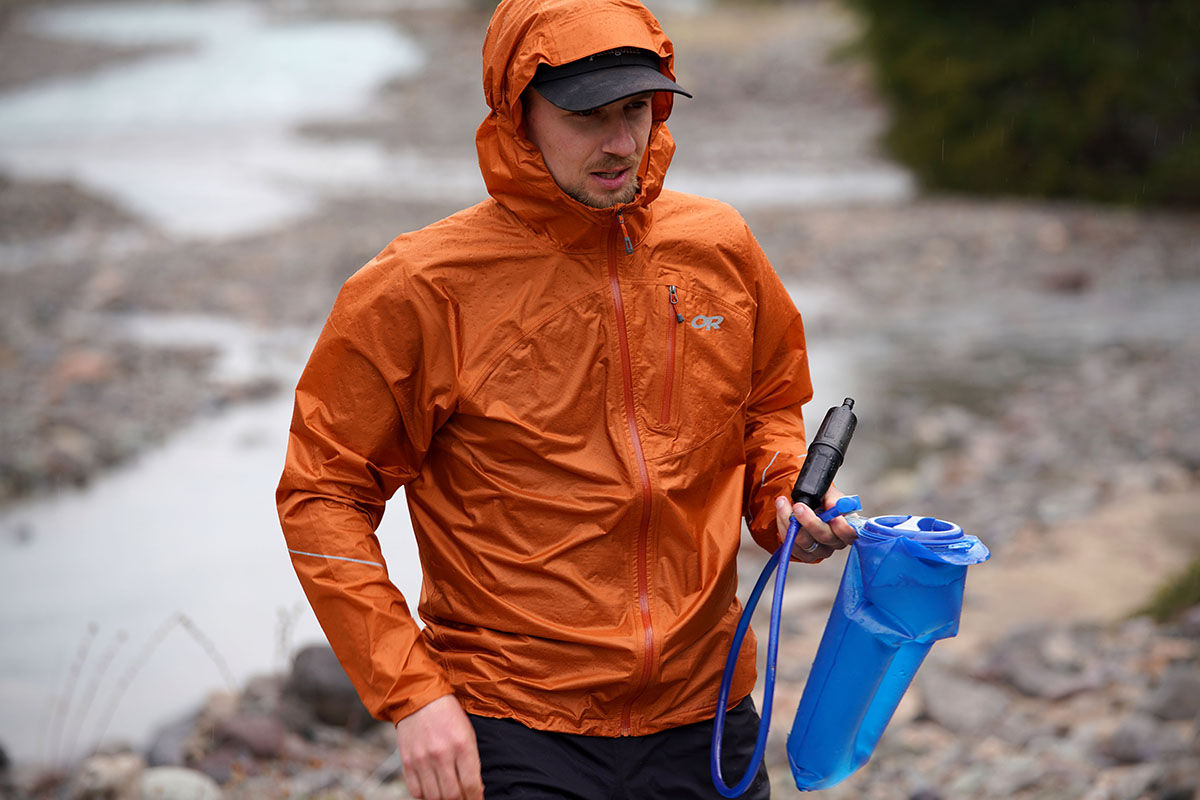
For backpackers, trail runners, and anyone counting ounces, the best raincoats are those that disappear into your pack and deploy instantly. The Outdoor Research Helium jacket has long been a favorite of mine for its incredible weight-to-protection ratio. Its Pertex Shield fabric is surprisingly effective for how light it is, making it perfect for emergency rain gear or fast-paced activities where breathability and minimal bulk are paramount. The newer Black Diamond Fineline Stretch Shell also impresses with its stretch fabric, offering superior mobility while maintaining solid weather protection. For more options in this category, you can check out insights on the best lightweight waterproof jackets.
Pros:
- Extremely lightweight and packable
- Good waterproof protection for its class
- Fineline offers excellent stretch and mobility
- Ideal for ultralight backpacking and trail running
Cons:
- Less durable than heavier 3-layer jackets
- Limited features to save weight
- Breathability can be a concern during high output
Key Features to Look For in the Best Raincoats
Beyond the fabric and construction, the devil is in the details when choosing the best raincoats. Small features can make a huge difference in comfort and functionality.
Hood Design
A good hood is non-negotiable. Look for:
- Adjustability: Drawcords or toggles to cinch the hood around your face and adjust volume over a helmet or bare head.
- Brim: A stiffened brim helps keep rain off your face and glasses.
- Visibility: Ensure the hood allows for good peripheral vision when cinched.
Zippers and Seams
- Watertight Zippers: YKK AquaGuard or similar water-resistant zippers are key. They might be stiffer but prevent water ingress.
- Storm Flaps: If zippers aren't watertight, a storm flap covering the main zipper and pockets is essential.
- Taped Seams: Every seam must be fully taped to be waterproof. This is a critical feature for truly waterproof raincoats.
Pockets and Ventilation
- Placement: Pockets should be accessible even when wearing a backpack hip belt or climbing harness.
- Vents: Pit zips (underarm zippers) are invaluable for dumping heat during strenuous activity. Some jackets also have core vents or mesh-lined pockets that can double as vents. You might also want to look for raincoats specifically designed for men, such as those found when searching for the best raincoats for men.
Fit and Mobility
The best raincoats offer a balance of protective fit and freedom of movement. You want enough room to layer underneath, but not so much that it feels baggy and catches wind. Look for articulated sleeves and gusseted underarms that prevent the jacket from riding up when you raise your arms.
Durable Water Repellent (DWR) Finish
This is the first line of defense. DWR is a coating on the outer fabric that makes water bead up and roll off. When it wears off (which it will, over time), the fabric "wets out," making the jacket feel heavy and reducing breathability, even if the membrane underneath is still waterproof. Regularly re-treating your DWR is crucial.
The difference between a good and a great raincoat often lies in the quality of its DWR and the thoughtful design of its hood and ventilation system.
Considering women's specific needs? There are fantastic options out there, including the best women's waterproof rain jackets and even insulated versions like the women's insulated rain jacket.
Seasonal and Local Insights: When & Where You'll Need Your Raincoat Most
The kind of raincoat you need often depends on where and when you're going to use it.
Spring and Fall: Shoulder Season Challenges
These are often the trickiest seasons. You need versatility. In spring, melting snow and frequent showers demand strong waterproof protection, but you also need breathability for fluctuating temperatures. A good 2.5-layer or light 3-layer jacket with pit zips, like the Patagonia Torrentshell, shines here. In the fall, colder rains and potential for early snow require something that can comfortably layer over a fleece or light insulation.
Summer: Unexpected Storms and Humid Rain
Even in summer, mountain storms can be fierce and sudden. Here, ultralight and highly packable raincoats (e.g., Outdoor Research Helium) are key. You'll carry it more than you wear it, but when you need it, you *really* need it. Breathability is paramount in humid conditions to avoid feeling like you're wearing a sauna suit.
Winter: Layering for Cold and Wet
For winter, your raincoat becomes the outer shell of a multi-layer system. It needs to be durable enough to withstand snow, ice, and abrasion, while offering sufficient space for insulating layers underneath. Here, a robust 3-layer hardshell is often the best choice, especially if you're skiing or mountaineering. Its primary role is to shed precipitation and block wind, keeping your inner insulation dry. Consider checking out solutions for golf rain gear or golf rain pants for specific needs in colder, wet conditions on the course.
Local Considerations: From Coastal Drizzle to Desert Monsoons
- Pacific Northwest: Prepare for constant, often misty rain. High breathability and consistent DWR are key. I've found that a quality 3-layer jacket handles the relentless wetness much better here.
- Northeast & Mid-Atlantic: Expect heavy, cold rains, especially during frontal passages. Durability and good layering space are important.
- Southwest (Monsoon Season): Intense, brief downpours. Ultralight, packable options are great for these sudden bursts, as you'll likely shed the jacket once the storm passes.
- Mountainous Regions: Rapidly changing weather means you need versatile raincoats that perform across a wide range of conditions. Wind protection is as important as waterproofing.
General Ranger Advice: Practical Tips for Staying Safe and Dry
While I haven't been a park ranger myself, I've had countless conversations with them and absorbed their wisdom over the years. Their advice often boils down to common sense, but it’s invaluable when you’re out in unpredictable weather.
- Always Carry Rain Gear: This might seem obvious, but many people underestimate how quickly mountain weather can change. Even on a sunny day, a storm can roll in. A ranger once told me, "The best raincoat is the one you have with you." Make it a habit to always pack at least a lightweight emergency shell.
- Layer, Don't Overdress: Raincoats are your outer defense. Underneath, use breathable layers (wool or synthetic) that can wick moisture. Cotton is a definite no-go as it loses its insulating properties when wet.
- Check the Forecast, Then Prepare for Worse: Modern forecasts are amazing, but microclimates, especially in mountains, can defy predictions. Always pack for conditions worse than what's predicted.
- Know Your Gear's Limits: Understand if your raincoat is water-resistant or fully waterproof. Don't expect a lightweight running shell to handle an Alaskan storm. Similarly, know when your DWR needs a refresh.
- Protect Your Essentials: While your raincoat protects you, make sure sensitive items like your phone, map, and extra layers are in waterproof dry bags or stuff sacks inside your pack.
Rangers emphasize preparedness, and your raincoat is a cornerstone of that philosophy. Staying dry prevents discomfort, yes, but more importantly, it can prevent hypothermia, which is a serious threat in many outdoor environments.
What Users Are Saying: A Glimpse from Amazon, Reddit, and Quora
While my personal experience is extensive, I always value the broader perspective of other outdoor enthusiasts. Here’s a summary of common sentiments I’ve seen across platforms like Amazon, Reddit, and Quora regarding some of the best raincoats:
Review Summary 1 (Amazon - Columbia Watertight II)
I bought the Columbia Watertight II for a trip to Ireland, and it was a lifesaver! It rained every day, but this jacket kept me completely dry. It’s lightweight enough that I didn’t overheat, and it packed down super small into my daypack. For the price, you absolutely can’t beat it. It's not fancy, but it just works.
— Verified Purchaser, Amazon.comReview Summary 2 (Reddit - Patagonia Torrentshell 3L)
My Torrentshell 3L has been my go-to for over three years now. It's fantastic for backpacking. I've taken it through some serious weather in the PNW and Rockies, and it always holds up. The pit zips are crucial for breathability on climbs. Some complain about the fabric feel, but I honestly find it very durable and reliable. Worth every penny for a dependable shell.
— u/HikingDude87, Reddit r/UltralightReview Summary 3 (Quora - Arc'teryx Beta Series)
Is Arc'teryx worth the price? For serious mountaineering or guiding, absolutely. My Beta AR has seen blizzards, torrential rain, and rock abrasion, and it's still performing like new after years. The fit, the hood, the Gore-Tex Pro — it's all engineered to perfection. If your life or comfort depends on your gear in harsh conditions, it's one of the best raincoats you can invest in.
— Experienced Climber, Quora discussionThese reviews echo much of my own sentiment: budget options like Columbia offer incredible value for casual use, Patagonia provides a superb balance for serious recreationalists, and Arc'teryx stands as the pinnacle for extreme conditions. It's clear that the "best" often aligns with the specific demands of your adventures and your budget.
Care and Maintenance for Your Best Raincoats
Even the best raincoats won't perform optimally if not cared for properly. Regular cleaning and re-treatment are crucial for maintaining waterproofing and breathability.
Why Clean Your Raincoat?
Dirt, body oils, and residues from sunscreen or insect repellent can clog the pores of the waterproof membrane and compromise the DWR finish. This makes the fabric "wet out," meaning water soaks into the outer layer instead of beading up, which drastically reduces breathability and makes you feel clammy.
How to Clean Your Raincoat
- Use Technical Wash: Avoid conventional detergents, as they can leave residues that harm DWR and membranes. Use a technical wash designed for waterproof breathable fabrics (e.g., Nikwax Tech Wash or Granger's Performance Wash).
- Machine Wash: Close all zippers and Velcro fasteners. Wash on a gentle cycle with cool water. Rinse thoroughly.
- Re-activate DWR (Heat Treatment): Often, washing alone can re-activate the DWR. Tumble dry on low heat for about 20 minutes (check your jacket's specific care label!). The heat helps to re-bond the DWR polymers.
- Re-apply DWR (If Necessary): If water still doesn't bead up after cleaning and heat treatment, it's time to re-apply a DWR product. These come in wash-in or spray-on forms (I prefer spray-on for more consistent application). Follow product instructions carefully.
Storage Tips
Store your raincoat clean and completely dry. Avoid compressing it tightly for long periods, as this can wear down the membrane over time. Hanging it in a closet or loosely folding it is ideal. Proper care extends the life and performance of your investment in the best raincoats.
Frequently Asked Questions About the Best Raincoats
What brand makes the best raincoats?
Based on my experience and extensive research, brands like Patagonia, Arc'teryx, and Outdoor Research consistently stand out for their innovative designs, durable materials, and reliable waterproofing. Patagonia's Torrentshell 3L offers excellent value and performance for everyday hikers, while Arc'teryx, with models like the Beta SL, excels in high-performance and ultralight categories, albeit at a premium price. Outdoor Research provides great middle-ground options, balancing features, durability, and cost. Ultimately, the 'best' brand depends on your specific needs, budget, and the type of activity you plan for, but these brands are trusted by outdoor enthusiasts worldwide for a reason.
What's the best waterproof raincoat?
The 'best' waterproof raincoat is often a subjective choice, but generally, I look for models utilizing advanced membrane technologies like Gore-Tex (e.g., Arc'teryx Beta series) or Patagonia's H2No Performance Standard (e.g., Torrentshell 3L). These fabrics offer superior breathability alongside robust waterproofing. A top-tier option would be something like the Arc'teryx Beta LT or Patagonia Storm Racer for their exceptional balance of protection, low weight, and packability, making them ideal for serious outdoor pursuits where every ounce matters. For more general use, durable 2.5-layer or 3-layer options from Marmot or Outdoor Research also offer excellent protection.
What is better, Swisswell or frogg toggs?
When comparing Swisswell and Frogg Toggs, it really comes down to intended use and budget. Frogg Toggs are renowned for their incredible value, lightweight design, and excellent packability, often favored by thru-hikers and budget-conscious adventurers. Their proprietary non-woven fabric offers surprisingly good waterproofing but might lack the long-term durability or premium feel of higher-end brands. Swisswell, while perhaps less widely known in some circles, often focuses on more robust, durable rain gear, sometimes leaning towards workwear or heavy-duty outdoor use. If ultralight and inexpensive is your priority, Frogg Toggs are great. If you need something tougher, Swisswell might be worth exploring, but Frogg Toggs generally offer a better balance for typical recreational outdoor activities.
Is frogg toggs really waterproof?
Yes, Frogg Toggs rain gear is genuinely waterproof, thanks to their proprietary non-woven fabric, often polypropylene. I've personally worn them in serious downpours during backpacking trips, and they've kept me dry. However, it's important to understand their limitations. While waterproof, the material isn't as durable or abrasion-resistant as some high-tech laminated fabrics. Punctures can occur, and the breathability, while decent for their price point, isn't on par with Gore-Tex. They are excellent for shedding water and are incredibly lightweight, making them a fantastic emergency shell or budget-friendly option for activities like fishing, hunting, or casual hiking, but they require a bit more care than a rugged hardshell.